


How to Get a Job at Google: A Practical Application Guide in 2026
Google receives roughly a million job applications every year and hires fewer than 0.2% of them. This isn't another guide full of vague platitudes. What follows is the practical stuff — how their internal Hiring Committee actually works, the resume mistake that kills most applications before a recruiter even opens them, and the one resource Google itself built for interview prep that almost nobody uses.
- The honest reality of applying to Google
- Know which Google you're actually applying to
- The application: what Google really reads
- The referral shortcut (and how to get one)
- Every stage of the hiring process
- Googleyness: what it actually means
- The Hiring Committee — what most guides miss
- Team matching: the hidden final round
- Prep resources most candidates never find
- An 8-week prep plan
- What to do when you get rejected
The honest reality of applying to Google
Let's skip the motivational opener. Google is genuinely one of the hardest companies to get into — and not just because of technical bars. The process is long, typically six to twelve weeks from first application to offer, and deliberately layered so that no single person makes the final call about you.
What most guides quietly omit: many current Googlers applied multiple times before they landed an offer. Your application data is saved after a rejection, which makes future applications easier. That said, being strategic from the first attempt beats treating it as a trial run.
Google's Hiring Committee is made up of senior Googlers who were not present during your interviews. They read a compiled packet — your resume, all interviewer feedback, ratings — and vote collectively on your hire. This means your interviewers don't decide your fate. The committee is a separate audience reading notes, not watching you perform. This changes how you should prepare.
Know which "Google" you're actually applying to
People say "I want to work at Google" as if it's one monolithic place. Under Alphabet, there are engineering divisions, product orgs, sales teams, research labs (including Google DeepMind), and hardware groups like Google Nest. The hiring culture, interview emphasis, and day-to-day work differ enormously.
- Software Engineering (SWE/SRE): Heavy focus on data structures, algorithms, and system design — especially at L5 and above. Expect problems at LeetCode-hard difficulty.
- Product Management: Strategy, metrics, product sense, user empathy. The bar for articulating why something is valuable to users is extremely high.
- Sales & Marketing: Behavioral-heavy with client case studies and comfort with ambiguous business problems.
- Operations & People roles: Structured behavioral interviews, Googleyness weighted more heavily, less technical depth required.
- Research (DeepMind, Google Brain): PhD-level expectations, publication record often reviewed, research design discussions common.
Before applying, spend real time on the specific team pages inside careers.google.com. Read the job description not just for keyword matching, but for the priority ordering — the first listed responsibility is what the hiring team will probe deepest on.
The application: what Google really reads
Your resume
Google's careers portal absorbs enormous volume. Recruiters skim first — they don't read. The standard advice to quantify achievements and use action verbs is correct but incomplete. What actually separates screened-in resumes is specificity of impact, not just numbers on a page.
Instead of: "Improved system performance by 40%"
Try: "Reduced p99 latency from 800ms to 480ms by refactoring cache invalidation logic, cutting checkout page drop-off by 12% over six weeks."
The second version shows cause, metric, and business consequence. That combination is exactly what Google trains its recruiters to look for in a resume scan.
Submitting a generic resume across multiple roles. Google's ATS and recruiter screens are role-specific. A resume built for a senior SWE position at Google Maps will actively hurt you when applying for a PM role at Google Cloud. Every application should be a separate document.
Does Google require a degree?
No. Google removed degree requirements for most roles years ago and GPA is only considered for recent graduates who voluntarily include it. What matters is demonstrable, verifiable skill. Research roles and certain ML positions still prefer advanced degrees, though don't always require them.
Mirror the job description — deliberately
Match the language in the JD on your resume and in your interviews. Not to game an algorithm, but because Google interviewers often use the job description as a structural framework for what to probe. If the JD prominently mentions "cross-functional collaboration," have a concrete STAR story ready that demonstrates exactly that.
The referral shortcut — and how to actually get one
A referral doesn't guarantee an interview, but it gets your resume in front of a recruiter faster and provides a baseline signal of credibility. Most people know referrals help. Fewer people know how to ask for one without making it awkward or coming across as transactional.
The wrong way: "Hey, could you refer me to Google?" — cold ask, gives the person nothing to evaluate you on.
A better way: Message a Google employee you have any genuine connection with. Tell them specifically which role you're targeting, why you think you're a strong fit, and offer to send your resume so they can form an actual opinion before deciding. Most Googlers are more willing to refer someone they feel confident about than a stranger who simply asks.
- Connect with Googlers in your target org on LinkedIn — engage with their content genuinely before reaching out
- Attend Google-hosted events: Google I/O extended meetups, Google Developer Groups, and campus recruiting events are real access points
- Former colleagues who've joined Google are your warmest possible path — don't overlook them
- University alumni networks often have dozens of Googlers across orgs — dig into your alumni database
Every stage of the hiring process
Here's the full sequence with honest time expectations at each step. Most guides gloss over stages six and seven — don't skip them.
Googleyness: what it actually means
Every guide mentions "Googleyness." Very few explain it with any precision. Here's what the term covers inside Google's formal interview scoring framework, based on their publicly available hiring documentation.
"We're looking for people who dream of the next moonshot idea, thrive in ambiguity, value feedback, effectively challenge the status quo, and do the right thing."
That phrase comes directly from Google's own interview preparation materials. Broken down into signals you can actually prepare for:
1. Thriving in ambiguity
Google's work is often genuinely open-ended. They want evidence you can make progress without a fully defined brief. In the interview room, this means: don't wait to be handed a framework. If a question is vague, state your assumptions out loud and move forward anyway. Asking five clarifying questions before attempting any answer reads as hesitant, not thorough.
2. Valuing feedback
Expect interviewers to push back on your answers — even correct ones. This is intentional. They want to see how you handle challenge. Saying "That's a fair point, let me reconsider" is a green flag in their scoring rubric. Digging in defensively is a red one.
3. Challenging the status quo
Have you changed a process, questioned an assumption, or shipped something that didn't follow the obvious path? Prepare two or three stories where you didn't just execute instructions — you redefined the problem itself. Google is explicitly hiring builders, not executors.
4. Doing the right thing
This covers ethical decision-making, data privacy awareness, and honest communication under pressure. Interviewers are listening for moments where you prioritised doing what was correct over what was convenient. Stories where you cut a corner, let a teammate take blame, or quietly fudged a metric should not make it into your interview prep.
Write five stories from your career using the STAR-L method — Situation, Task, Action, Result, and then Learning. The Learning element is what Google's behavioral scorers specifically flag as a signal of intellectual humility and growth mindset. Tag each story with the Googleyness pillar it best demonstrates. During interviews, map incoming behavioral questions to the right story rather than improvising.
The Hiring Committee — the part most guides skip entirely
After your onsite interviews, every interviewer submits a detailed feedback form with a hiring recommendation ranging from "Strong no hire" through to "Strong hire." These forms, your resume, and recruiter notes are compiled into a single candidate packet that is then reviewed by people who were not in the room with you.
The Hiring Committee consists of senior Googlers who assess the packet holistically, without the biases that come from having personally met you. This structure exists deliberately to remove interpersonal bias from the final decision.
What this means practically:
- Be consistent across all five onsite rounds. The committee will notice if your leadership story contradicts itself across two interviewers' written notes.
- Don't coast on rapport. A warm, friendly conversation that produces vague, unquantified answers reads poorly when condensed into written committee notes.
- Your interactions with your recruiter matter too. How you communicate via email and respond to logistics can become part of the overall picture that informs the packet.
Many candidates focus entirely on impressing their interviewers — which matters — but forget that those interviewers are essentially writing a report about you for a completely different audience.
Team matching: the hidden final round
Most guides treat team matching as a formality after the Hiring Committee approves you. It is not. You can be approved by the committee and still not receive an offer if no team selects you within a certain window. Team matching involves real conversations with potential managers — mutual selection, not an announcement.
Things candidates routinely get wrong in team matching:
- Not asking about the team's current challenges — this is your strongest signal of whether you'll find the work meaningful
- Saying "I'm open to anything" when asked for preferences — it reads as disengaged, not adaptable
- Failing to research the specific product or project the team owns before the matching call
- Accepting the first team out of urgency rather than fit
You do have genuine agency here. If a team conversation feels wrong — misaligned scope, unclear roadmap, management style that doesn't suit how you work — you can politely decline and wait for another match. Team-level misalignment is one of the most common reasons new Googlers leave within their first year.
Prep resources most candidates never find
These go well beyond the standard "practice LeetCode" advice. Several of these are made by Google directly — and are consistently overlooked.
| Resource | What it's for | Cost |
|---|---|---|
| Google Tech Dev Guide | Google's own curated coding curriculum with structured learning paths built for interview prep. Free, authoritative, and massively underused by candidates. | Free |
| Life at Google (YouTube) | Google's official "How We Hire" playlist. Includes real examples of what interviewers look for at each stage, structured by role. More valuable than most paid courses. | Free |
| IGotAnOffer — Google Process | Detailed breakdown with real candidate reports including Hiring Committee timelines and team matching outcomes. One of the most accurate third-party sources available. | Free |
| Google Career Certificates | If you're pivoting into a tech-adjacent role (data analytics, UX, IT support, project management), these certificates are built by Google and are directly recognised by Google recruiters during screening. | Paid |
| Levels.fyi — Google Salary Data | Real, self-reported compensation data broken down by level and role. Essential before entering salary negotiation. Knowing L4 vs L5 bands in advance is a significant negotiating advantage. | Free |
| Glassdoor — Google Interview Reviews | Real interview question reports from candidates who went through the process recently, often role-specific. Useful for understanding what the current cohort is being asked. | Free |
| Google Research Papers (Bigtable, Spanner, Borg) | For SWE candidates targeting senior levels, reading Google's foundational system design papers is genuine exam prep. These inform exactly the type of architectural thinking Google assesses at L5+. | Free |
| Fortune Vacancies — Live Google Roles | Aggregated, up-to-date listings for Google and Alphabet jobs across departments and global locations. Bookmark this to track new postings in your target function as they go live. | Free |
An 8-week prep plan that actually works
If you have an interview coming up, here's a realistic week-by-week schedule built around the process described above — not a generic study plan.
What to do when you get rejected
A rejection from Google is not rare — it is the overwhelming norm even for very strong candidates. A few things worth knowing before you close that rejection email and move on.
Google has a reapplication window (typically six months to one year for the same role type), but you can often apply to different roles sooner. Ask your recruiter directly — they will tell you the actual timeline that applies to your specific situation rather than you having to guess.
Request a debrief if you can. Recruiters don't always volunteer detailed feedback, but you can ask. Even a brief "the committee wanted stronger system design signals" tells you something actionable for your next attempt.
Many current Googlers applied two, three, or even four times before getting in. The process rewards deliberate, structured improvement between attempts more than it rewards raw ability on a single try.
Google is not the only great job in tech. The process is long, expensive in terms of time and energy, and ends in a rejection for the overwhelming majority of strong candidates. If you're deep in parallel offer processes, don't put everything on hold for a Google timeline that might take three more months and still end in a no. Run parallel processes, negotiate timelines honestly with everyone, and make the best decision available to you — not just the most prestigious one on paper.
Looking for open roles at Google right now?
Browse current Google and Alphabet job listings across all departments and global locations — updated daily.
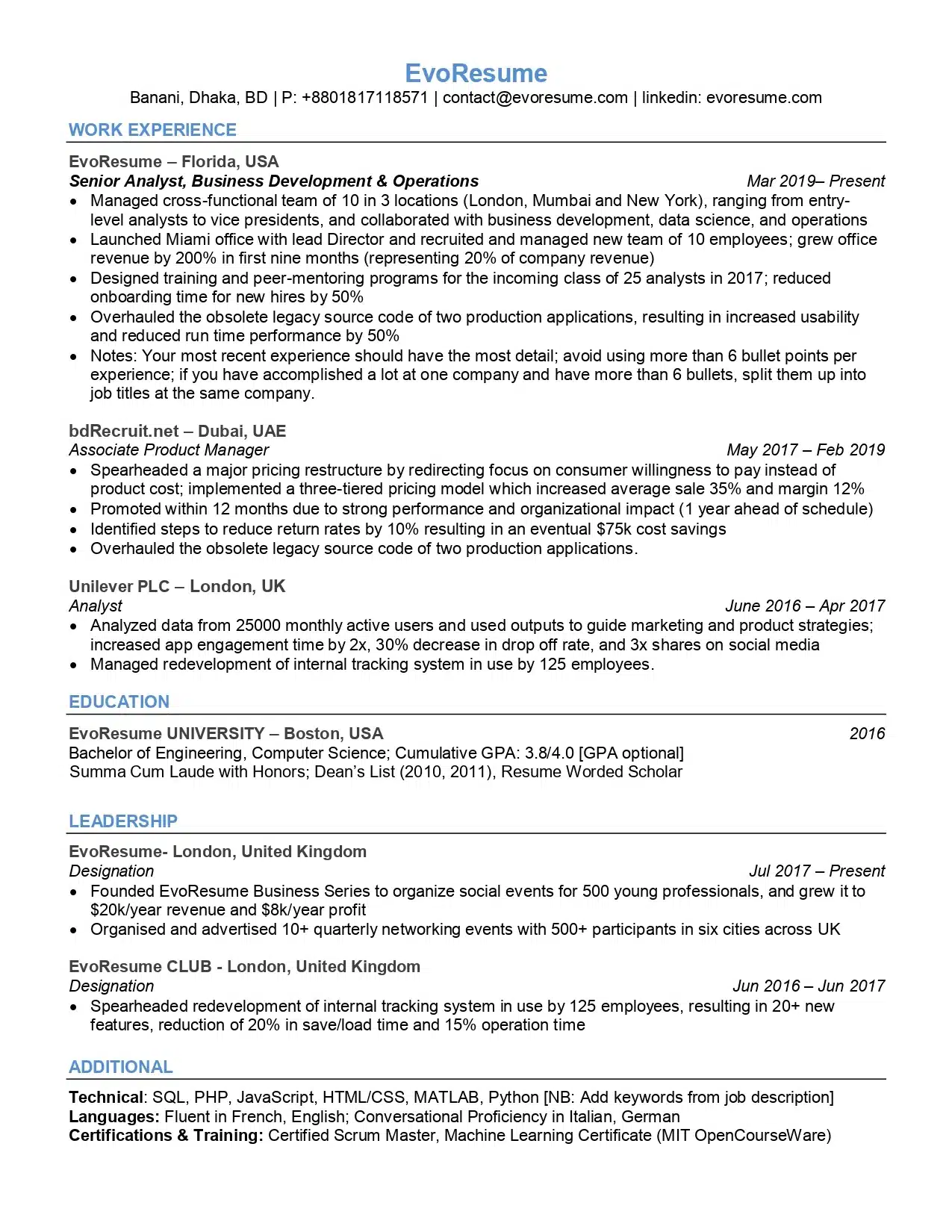
Built to clear the ATS filters at Microsoft, Google, Amazon, and other top employers. Editable .DOC file ready to fill in, no design skills needed.
- Single-column ATS-safe layout
- Correct section order recruiters expect
- Pre-loaded power action verbs
- Keyword-ready skills section
- Compatible with Microsoft Word
- Built for 2026 hiring standards