


Amazon Hiring Process Explained 2026: What Candidates Should Expect
Amazon's hiring process is unlike any other major tech company's. The Leadership Principles aren't just wall art at the Seattle HQ — they are a structured scoring system embedded into every interview round, every Online Assessment, and every Bar Raiser conversation. If you walk in without understanding how that system works, you will lose to candidates who do. This guide explains the full process, step by step, with the details most guides quietly skip.
- What makes Amazon's process different
- The Amazon you're applying to
- Application and resume screening
- The Online Assessment: what's actually in it
- The recruiter and phone screen
- The interview loop explained
- The Bar Raiser: Amazon's secret gatekeeper
- All 16 Leadership Principles — and what they test
- How to structure your answers: STAR method
- Prep resources worth your time
- A 6-week prep timeline
- The mistakes that end otherwise strong applications
What makes Amazon's process different
Most large tech companies have behavioral interview rounds that feel like checkboxes — something to get through before the "real" technical rounds. Amazon is different. The Leadership Principles aren't a soft cultural add-on. They are a formal scoring rubric that every interviewer is trained to apply, and they carry equal weight to technical ability at almost every level.
Amazon interviewers are each assigned two or three specific Leadership Principles before they walk into the room. Their job is to probe those principles, score you against them, and submit a written recommendation that goes into a hiring decision packet — one that a broader group will read after your interview day is over.
This means you can ace the coding rounds, fumble two behavioral questions, and still not get an offer. Preparation for Amazon has to be dual-track: technical and behavioral, in parallel, weighted equally.
There is no separate "Leadership Principles round" — the LPs run through every interview in the loop. Even your technical rounds will open or close with behavioral questions tied to specific principles. You will never be assessed purely on code or system design alone.
The Amazon you're actually applying to
Amazon employs over 1.5 million people across wildly different functions. The hiring process, interview format, and assessment types vary significantly depending on which part of the business you're targeting.
- Software Development Engineer (SDE): Heavy coding focus — data structures, algorithms, system design. Expect LeetCode-medium to hard problems. LP questioning is intensive throughout.
- Amazon Web Services (AWS): Similar to SDE but with stronger emphasis on distributed systems and cloud architecture. AWS roles also tend to probe "Think Big" and "Dive Deep" more heavily.
- Product Manager: Product sense, metrics, customer-backward thinking. Significantly less technical coding; more emphasis on "Customer Obsession" and "Earn Trust."
- Operations and Area Manager: On-the-ground leadership, process improvement, and safety culture. Behavioral assessment is dominant. Different Online Assessment format from corporate roles.
- Retail and Corporate: Business analyst, finance, marketing, HR. LP-heavy behavioral interviews, often fewer rounds but high bar on storytelling and data-backed decisions.
- Fulfillment Centre (FC) roles: Faster-paced hiring process with different assessment tools. Leadership Principles still apply but are evaluated through situational judgment tests rather than structured STAR responses.
Before applying, read the job description not just for required skills but for which Leadership Principles are implicitly emphasised. A JD that mentions "fast-paced environment," "owns outcomes," and "data-driven decisions" is signalling which LPs will be probed in your loop.
Application and resume screening
Amazon receives millions of applications. The first pass is automated, and the second is a human recruiter making a quick call — typically in under two minutes per resume. Your resume has one job at this stage: survive both filters and land in the "phone screen" pile.
What Amazon recruiters look for
- Quantified impact statements — not just what you did but the measurable result of doing it
- Customer-facing outcomes when relevant — "reduced customer wait time by 22%" beats "improved response times"
- Ownership language — "I led," "I built," "I decided" reads better than "we implemented" or "the team delivered"
- Keywords from the job description — Amazon's ATS is role-specific and keyword-sensitive
- Relevant tenure — Amazon values depth of experience, not just breadth of job-hopping
Amazon recommends a clean, single-column resume with no graphics, no tables, and no headshots. Their ATS can misparse complex layouts. Keep formatting simple — it should look slightly boring and work perfectly.
Apply via amazon.jobs directly. Third-party job boards are fine for discovery, but always submit through the official portal so your application is properly tracked against the specific role ID.
The Online Assessment: what's actually in it
For most corporate, tech, and management roles, Amazon sends an Online Assessment (OA) after your resume is shortlisted. This is not a personality quiz. It is a scored, timed evaluation that feeds directly into whether you advance to the phone screen — and roughly 60% of candidates don't pass it.
The OA typically has four components, though the exact mix varies by role:
Amazon uses a three-tier scoring system: green (auto-advances), yellow (manual review depending on current hiring volume), and red (auto-rejected). The Work Simulation carries the highest weighting. A red score on the Work Simulation almost always means rejection regardless of how you perform on other sections. Complete this section first and give it your full focus.
The recruiter screen and phone interview
Recruiter phone screen (30–45 minutes)
If you pass the OA, a recruiter calls to cover your background, motivation, compensation expectations, and availability. This is a real filter, not a formality. Recruiters are specifically listening for red flags: unexplained gaps, inconsistencies with your resume, and whether you can clearly explain why Amazon specifically — not just "a big tech company."
One question to prepare for that most guides overlook: "Which of Amazon's Leadership Principles resonates most with you, and can you give me an example from your career?" This is increasingly common in recruiter screens and catches unprepared candidates completely off-guard.
Technical phone screen (45–60 minutes)
For SDE and technical PM roles, there is typically one or two technical phone screens before the full interview loop. These include both a coding or product problem and behavioral questions tied to specific LPs. Your interviewer is already scoring you against assigned principles from this stage.
Amazon recruiters can tell you which Leadership Principles are most relevant to the role you're interviewing for, and often will if you ask directly. A simple "Are there any particular leadership principles that come up frequently for this team?" is a perfectly reasonable question and often yields genuinely useful preparation intelligence.
The interview loop explained
The interview loop is the main event — four to six back-to-back interviews, usually completed in a single day (virtually or in person). Each interviewer is pre-assigned two or three Leadership Principles and is responsible for probing only those. No two interviewers are assigned the same principles, which means the loop is specifically designed to cover the full set of LPs across the group.
For most roles, the loop includes:
- One or two coding interviews (SDE and technical roles)
- One system design interview (L5 and above)
- Two to three behavioral interviews covering assigned LPs
- One Bar Raiser interview (covered in detail below)
After the loop, all interviewers submit written feedback and a hiring recommendation. These are compiled into a debrief document. The hiring manager and Bar Raiser then facilitate a discussion and reach a consensus hiring decision. This process typically takes one to two weeks after your final interview day.
Back-to-back interviews with virtually no downtime is mentally exhausting. Round four and five are where most candidates start cutting corners on their STAR answers — rushing to the result without explaining their reasoning. Build your stamina in practice by running four sessions back-to-back with no breaks. The difference is significant and almost always surprises people the first time they try it.
The Bar Raiser: Amazon's secret gatekeeper
One interviewer in your loop will be a Bar Raiser. They are a senior Amazon employee from a completely different team — not the team you're applying to. Their role is singular: to ensure that every new hire is better than at least 50% of current employees at that level. Amazon's stated hiring philosophy is that every person hired should raise the overall quality bar of the company.
The Bar Raiser has effective veto power. If they vote "no hire," the hiring decision goes into a deeper discussion — and in practice, a Bar Raiser objection frequently kills an otherwise positive loop.
What the Bar Raiser specifically looks for:
- Depth of reasoning, not just correct answers — they probe until you run out of detail
- Individual contribution — they will push back on "we did X" until you explain specifically what you did
- Second-order thinking — were you considering tradeoffs, downstream consequences, longer-term implications?
- Scale of impact — did your work matter in a measurable way, and can you quantify it?
- Culture-level fit — not just for the team, but for Amazon as a whole
You typically won't know in advance which interviewer is the Bar Raiser. Treat every interviewer as if they could be the one. The most common Bar Raiser tell: they ask longer, more probing follow-up questions and seem less interested in being friendly than the others.
All 16 Leadership Principles — and what they're actually testing
Amazon currently has 16 Leadership Principles. Every interview question you face maps to one of these. Memorising the names is not enough — you need a concrete story from your career for each one. Here they are with the signal each is actually looking for:
You don't need 16 separate stories. Most strong stories demonstrate multiple LPs simultaneously. Build eight to ten solid, detailed career stories and map each to the two or three LPs it best demonstrates. Versatile stories that cover "Ownership + Deliver Results" or "Invent and Simplify + Think Big" give you efficient coverage across the full set.
How to structure your answers: the STAR method
Amazon interviews are entirely story-based. Every behavioral question requires a specific example from your past — hypotheticals are penalised. The standard method for structuring these stories is STAR, and Amazon's interviewers are trained to score you on whether your answer covers all four (or five) components clearly.
The most common reason strong candidates fail Amazon behavioral rounds: they spend too long on Situation and Task and run out of time before fully developing Action and Result. Interviewers are scoring the depth of your Actions and the measurability of your Results — not how well you describe the background context.
Amazon interviewers are specifically trained to catch candidates who describe team outcomes using "we." If you say "we delivered the project on time," expect an immediate follow-up: "What was your specific contribution?" Prepare all your stories in first-person singular. It is not arrogance — it is what they need to score you accurately.
Prep resources worth your time
| Resource | What it's for | Cost |
|---|---|---|
| Amazon How We Hire (Official) | Amazon's own explanation of each stage of the process. The LP descriptions here are the authoritative source — read them verbatim, not a third-party summary. | Free |
| Exponent — LP Interview Guide | One of the most thorough third-party breakdowns of the LP interview with real sample questions and scored example answers for each principle. | Free |
| IGotAnOffer — Amazon Process | Real candidate reports covering the full loop experience including Bar Raiser encounters, timeline data, and offer outcomes. One of the most accurate sources available. | Free |
| Levels.fyi — Amazon Compensation | Self-reported salary data by level (SDE I, SDE II, SDE III etc.) and role. Essential before negotiating. Amazon offers are RSU-heavy and the total comp picture looks very different at different levels. | Free |
| LeetCode | For SDE candidates, the standard platform for coding prep. Focus on medium and hard problems in arrays, trees, dynamic programming, and graphs. Filter by "Amazon" for frequently reported questions. | Free |
| Glassdoor — Amazon Interview Reviews | Real LP questions reported by recent candidates, broken down by role and location. Useful for knowing which LPs are being hit hardest in the current hiring cycle for your target role. | Free |
| JobTestPrep — Amazon OA Prep | Full-length Work Simulation and Work Style practice tests with scored feedback. One of the better resources for OA preparation specifically, with role-specific add-ons for SDE and PM candidates. | Paid |
| Fortune Vacancies — Live Amazon Roles | Up-to-date Amazon job listings across all departments, levels, and locations worldwide. Bookmark for tracking new openings in your target function as they go live. | Free |
A 6-week prep timeline
Amazon's full process from application to offer typically runs six to eight weeks. If you've been invited to interview, here's how to spend the time before your loop:
The mistakes that end otherwise strong applications
These are the specific errors that experienced, qualified candidates make — not entry-level mistakes. They're worth knowing before your loop day, not after.
- Giving hypothetical answers to behavioral questions. "I would handle that by..." is an automatic red flag. Amazon requires a specific past example every time. If you don't have one, acknowledge it honestly and give the closest example you do have.
- Using "we" throughout your stories. Your interviewer is scoring your individual contribution. "We launched the feature" tells them nothing. "I designed the architecture, coordinated with three teams, and personally handled the stakeholder communication" tells them everything.
- Underselling your results. Candidates often stop at "it went well." Amazon interviewers want the number. Revenue saved, latency reduced, customer satisfaction score improved, team retention increased. If you don't have a metric, estimate one and say you're estimating.
- Treating the Bar Raiser like a standard interviewer. When follow-up questions get unusually deep and the interviewer seems notably less conversational, you may be in the Bar Raiser round. Go deeper, not shorter. Their job is to find your ceiling.
- Ignoring the OA. Many candidates treat the Online Assessment as a soft filter. It is not. A red score on the Work Simulation ends your application regardless of how strong your resume is. Prepare for it as you would for a structured interview.
- Not asking your recruiter which LPs to focus on. This question is expected and appreciated. Your recruiter often knows which principles are most relevant for the team you're interviewing with and will tell you if you ask.
Amazon's process is genuinely demanding, and rejection is the norm even for strong candidates. The process is also highly repeatable — you can re-apply after six months, and many current Amazonians applied more than once. If you don't make it through, ask for a debrief, identify the gap, and come back with better stories. The framework doesn't change. Your stories do.
Ready to find your Amazon role?
Browse current Amazon and AWS job openings across all departments, levels, and global locations — updated daily.
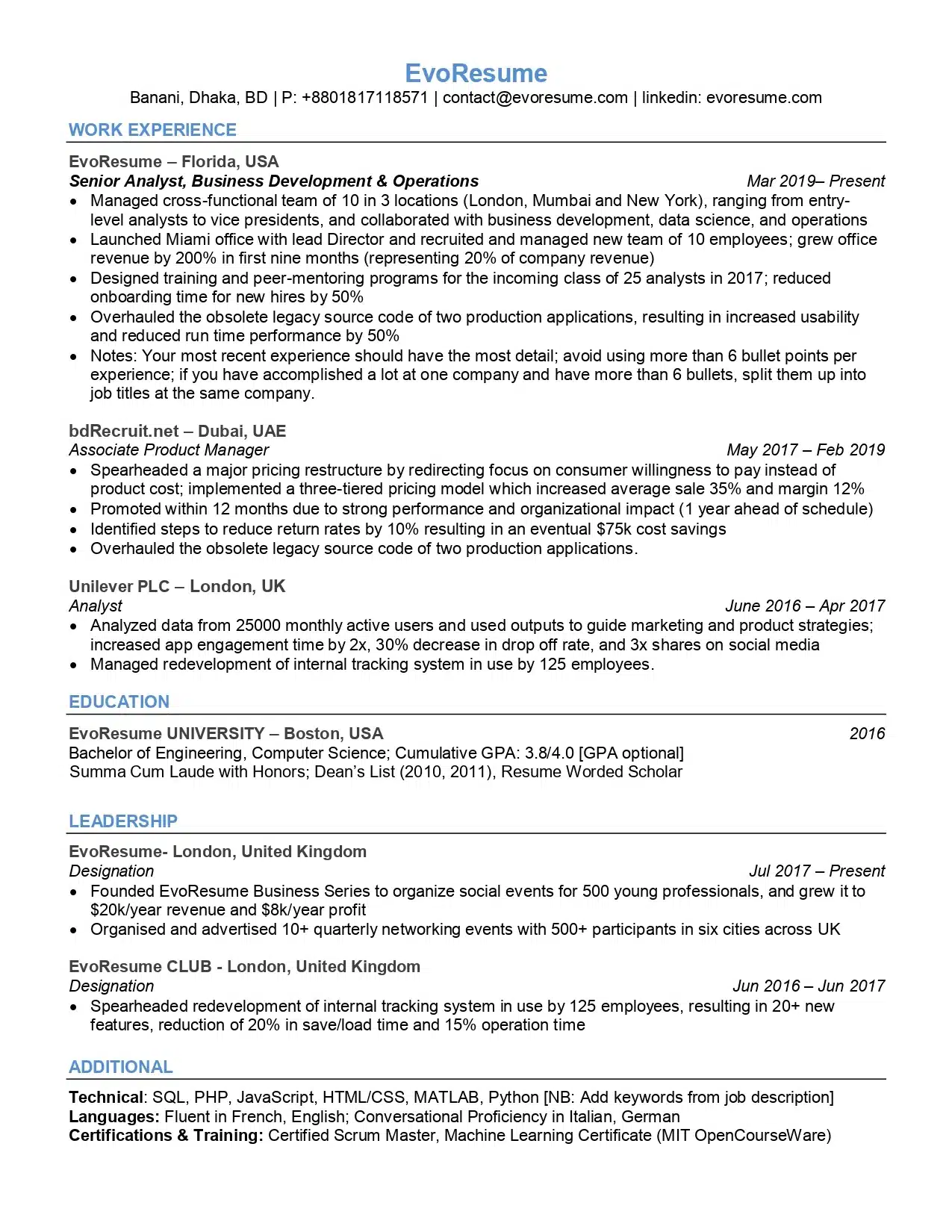
Built to clear the ATS filters at Microsoft, Google, Amazon, and other top employers. Editable .DOC file ready to fill in, no design skills needed.
- Single-column ATS-safe layout
- Correct section order recruiters expect
- Pre-loaded power action verbs
- Keyword-ready skills section
- Compatible with Microsoft Word
- Built for 2026 hiring standards